The global healthcare landscape is undergoing its most significant transformation since the invention of the antibiotic. We are no longer merely digitizing patient records; we are infusing the entire medical ecosystem with intelligence. In 2026, AI in Healthcare Solutions has moved from experimental pilot programs to the very backbone of clinical decision-making, drug discovery, and patient management.
This article explores how artificial intelligence is solving the most complex challenges in medicine, reducing clinician burnout, and—most importantly—saving lives through precision and speed.
1. The Core Pillars of AI in Healthcare Solutions
To understand the impact of AI in Healthcare Solutions, we must categorize the technology into its functional pillars. AI is not a single tool but a suite of technologies including Machine Learning (ML), Natural Language Processing (NLP), and Computer Vision.
Predictive Analytics and Risk Stratification
One of the primary applications of AI in Healthcare Solutions is the ability to predict patient outcomes before they occur. By analyzing historical electronic health records (EHRs), AI models can identify patients at high risk for chronic conditions like diabetes or heart failure, allowing for preventative intervention.
Clinical Decision Support Systems (CDSS)
Modern CDSS tools act as a “co-pilot” for doctors. These systems cross-reference a patient’s symptoms and history against millions of medical journals and clinical trials in seconds, providing evidence-based treatment suggestions.
-
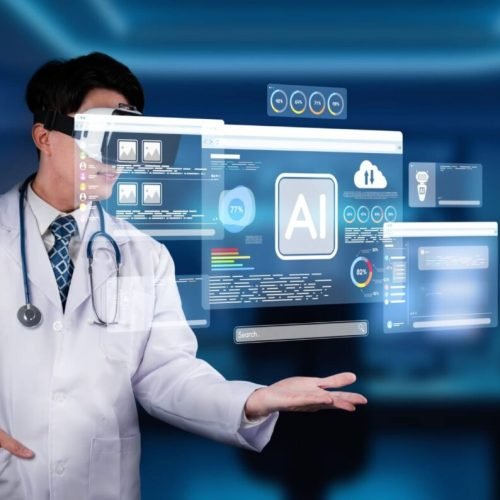
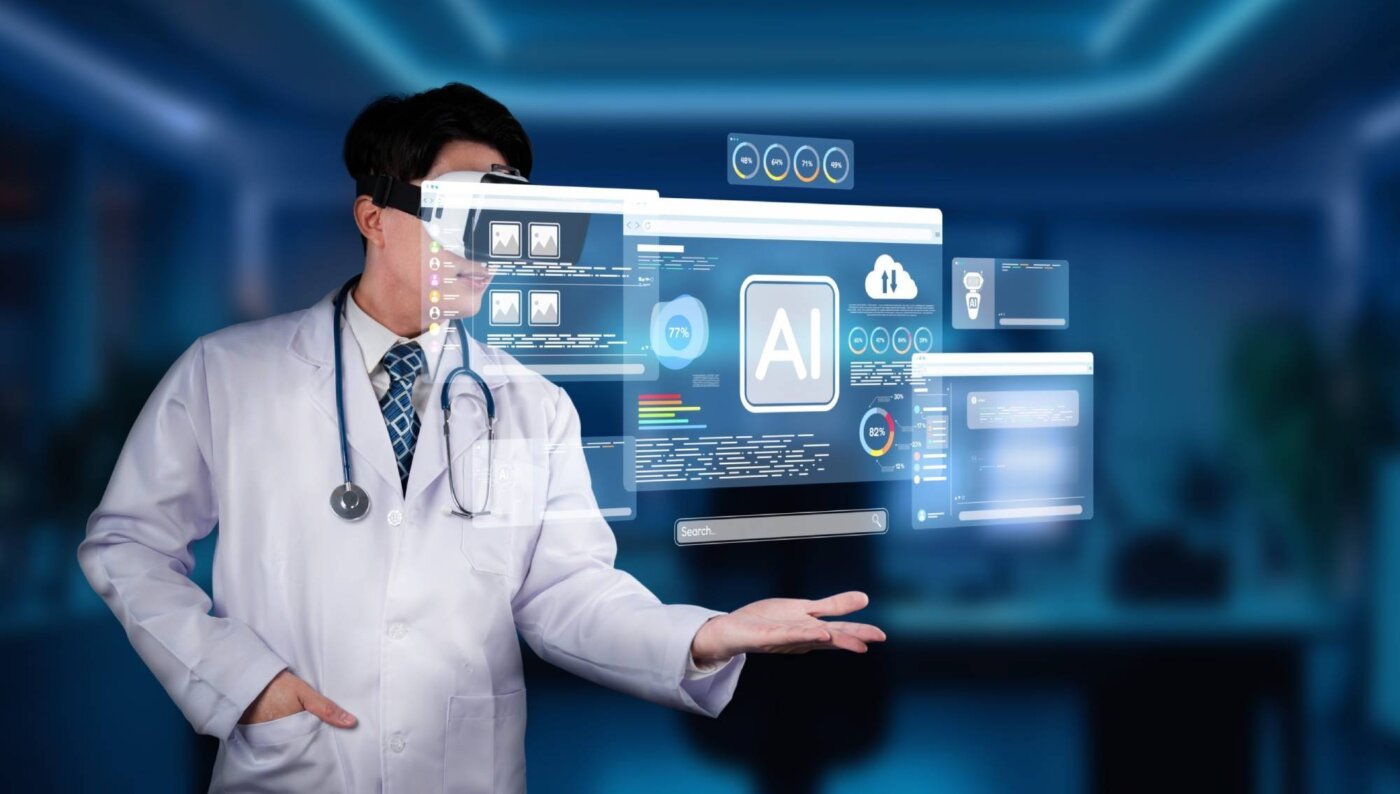
ALT text: AI in Healthcare Solutions dashboard visualizing real-time predictive analytics for patient monitoring.
-
Description: A high-tech medical monitor displaying AI-generated risk scores and diagnostic suggestions based on real-time patient data.
2. Transforming Medical Imaging and Diagnostics
Diagnostics is perhaps where AI in Healthcare Solutions has seen the most dramatic success. Human radiologists, while highly skilled, face fatigue and cognitive load. AI does not.
Radiology and Oncology
AI algorithms, specifically Deep Learning models, are now capable of detecting anomalies in X-rays, MRIs, and CT scans with accuracy rates that rival or exceed human experts. In oncology, AI is being used to spot early-stage tumors that are often invisible to the naked eye. According to research from the Mayo Clinic, AI-driven screening is reducing diagnostic errors by over 30%.
Pathology and Dermatology
By analyzing high-resolution images of skin lesions or tissue biopsies, AI can provide instant classifications of malignancy. This “Digital Pathology” allows for remote consultations and faster results for patients in rural areas.
3. AI in Drug Discovery: From Years to Months
The traditional process of bringing a drug to market takes over a decade and costs billions. AI in Healthcare Solutions is disrupting this “Eroom’s Law” (the observation that drug discovery is becoming slower and more expensive).
Molecular Simulation
AI models can simulate how billions of different molecules will interact with a specific protein target. This eliminates the need for years of “wet lab” trial and error. Leading platforms like DeepMind’s AlphaFold have revolutionized our understanding of protein folding, a key component in treating diseases like Alzheimer’s.
Repurposing Existing Drugs
AI is also being used to identify new uses for existing, FDA-approved drugs. By mapping the genetic pathways of diseases, AI can suggest existing medications that might be effective against emerging viruses or rare conditions, drastically shortening the path to clinical trials.
4. Personalized Medicine and Genomics
We are moving away from the “one-size-fits-all” approach to medicine. AI in Healthcare Solutions is the engine behind Precision Medicine.
Genomic Sequencing
AI algorithms can process the vast amount of data produced by whole-genome sequencing. By identifying specific genetic mutations, doctors can prescribe “Targeted Therapies” that work specifically for that patient’s genetic profile.
Pharmacogenomics
This branch of AI-driven medicine predicts how a patient will respond to a specific medication based on their DNA. This prevents adverse drug reactions (ADRs), which are currently a leading cause of hospitalization worldwide.
-
ALT text: Genetic data processing using AI in Healthcare Solutions for personalized medicine.
-
Description: A conceptual representation of DNA sequencing being analyzed by artificial intelligence to create custom patient treatments.

See also
- The Strategic Blueprint: Mastering Generative AI for Business in 2026
- The 2026 Ultimate Hardware Performance Comparison: Silicon Wars and the AI Revolution
- The Executive Roadmap: A Step-by-Step AI Implementation Guide for 2026
- The Backbone of Trust: A Definitive Guide to Data Governance Frameworks in 2026
- The Green Revolution: Leading Sustainable Tech Innovation Trends in 2026
5. Enhancing Patient Experience and Virtual Care
The patient’s journey has been traditionally fragmented. AI in Healthcare Solutions is bridging the gap between the clinic and the home.
AI Virtual Assistants and Chatbots
Advanced NLP-driven chatbots are now handling initial symptom triage. These bots can determine if a patient needs an emergency room visit, a tele-health appointment, or simple home care. This reduces the burden on over-crowded emergency departments.
Remote Patient Monitoring (RPM)
Wearable devices integrated with AI are now monitoring patients with chronic illnesses 24/7. If a patient with hypertension shows a spike in blood pressure combined with other physiological stress markers, the AI can automatically alert their care team or adjust their digital prescription.
6. Improving Operational Efficiency and Hospital Management
Healthcare is a massive administrative undertaking. AI in Healthcare Solutions is optimizing the “business” of saving lives.
-
Revenue Cycle Management: AI automates medical coding and billing, reducing administrative errors that lead to claim denials.
-
Staffing Optimization: Predictive models can forecast patient surges (e.g., during flu season), allowing hospital administrators to staff departments correctly and prevent nurse burnout.
-
Supply Chain Logic: AI ensures that life-saving equipment and medications are always in stock by predicting usage rates across different departments.
7. The Ethical Landscape: Privacy, Bias, and Trust
As we integrate AI in Healthcare Solutions, we must address the ethical hurdles that come with it.
Data Privacy and Security
Medical data is the most sensitive information an individual possesses. Implementing AI requires strict adherence to HIPAA regulations in the US and GDPR in Europe. Innovations in Federated Learning are allowing AI models to learn from hospital data without the data ever leaving the hospital’s secure servers.
Mitigating Algorithmic Bias
If an AI is trained on data that lacks diversity, its recommendations may be less accurate for minority populations. The current focus in 2026 is on “Algorithmic Fairness,” ensuring that AI in Healthcare Solutions provides equitable care for all, regardless of race, gender, or socioeconomic status.
-
ALT text: Cybersecurity and ethical guardrails for AI in Healthcare Solutions.
-
Description: A visual representing the protective layers of encryption and ethics surrounding patient medical data in the AI era.
8. The Future of AI in Healthcare: Surgery and Robotics
The next frontier for AI in Healthcare Solutions is the operating room.
AI-Assisted Surgery
Robotic systems like the Da Vinci are being enhanced with AI “vision.” While the surgeon still controls the robot, the AI provides real-time overlays that highlight nerves or blood vessels to avoid. In some cases, AI-driven robots are now performing repetitive tasks like suturing with greater precision than humans.
Nanorobotics
Looking further ahead, AI-guided nanobots are being developed to deliver drugs directly to cancer cells or to clear blockages in arteries from the inside, representing the ultimate integration of AI and physical medicine.
9. How Healthcare Providers Can Adopt AI Solutions
For medical institutions looking to implement AI in Healthcare Solutions, the path involves three critical steps:
-
Data Interoperability: Ensuring that data from different departments can “talk” to each other.
-
Clinician Buy-in: Training doctors and nurses to view AI as an assistant, not a replacement.
-
Scalable Infrastructure: Moving from local servers to Cloud-based AI Healthcare platforms that can handle massive computational loads.
10. Conclusion: A New Era of Healing
The integration of AI in Healthcare Solutions is not a luxury; it is a necessity. As the global population ages and the demand for medical services increases, AI provides the only scalable way to provide high-quality care to everyone.
We are moving from a reactive “Sick Care” system to a proactive “Health Care” system. By embracing AI, we are ensuring that the future of medicine is faster, more accurate, and more deeply human than ever before.