



The global narrative surrounding technology has undergone a fundamental shift. We have moved past the era of “innovation at any cost.” In 2026, the most successful enterprises are those that treat environmental stewardship not as a corporate social responsibility (CSR) checkbox, but as a core engineering requirement. Sustainable Tech Innovation is now the primary driver of competitive advantage in the digital economy.
From data centers powered by nuclear fusion to “circular” smartphones designed to last a decade, technology is finally reconciling with the planet. This article explores the cutting-edge developments in Sustainable Tech Innovation and how they are reshaping the future of energy, manufacturing, and computing.

1. Decarbonizing the Cloud: Green Data Centers
As the demand for Generative AI and Edge Computing explodes, so does the energy consumption of data centers. Sustainable Tech Innovation in 2026 is tackling this through “Carbon-Negative” infrastructure.
Under-Sea and Arctic Cooling
Major providers like Microsoft and Google are moving data centers to colder climates or underwater environments. By utilizing natural ambient temperatures for cooling, these facilities reduce their energy consumption for thermal management by up to 90%.
Hydrogen and Small Modular Reactors (SMRs)
The reliance on traditional power grids is fading. Top-tier data centers are now integrating SMRs—compact nuclear reactors that provide zero-emission, constant power. This ensures that the massive computational loads of AI training do not strain public energy resources.
2. Circular Electronics: Ending the E-Waste Crisis
Every year, millions of tons of electronic waste are discarded. Sustainable Tech Innovation is solving this through “Circular Design”—where every component is meant to be recovered, reused, or composted.
Modular Smartphones and Laptops
Companies like Fairphone and Framework have influenced the giants. In 2026, modularity is the standard. Consumers can now upgrade their CPU or camera module without replacing the entire device, drastically extending the lifecycle of hardware and reducing mineral mining requirements.
Bio-Degradable Circuit Boards
Researchers at MIT have perfected circuit boards made from mushroom-based mycelium or silk proteins. These boards function perfectly during the device’s life but dissolve safely in industrial compost facilities once the valuable metals are harvested.
3. Sustainable Tech Innovation in Energy Storage
The transition to renewables is limited by our ability to store power. In 2026, we are seeing a shift away from lithium-ion toward more sustainable alternatives.
-
Sodium-Ion Batteries: These use salt—an abundant resource—instead of scarce lithium. They are cheaper to produce and far easier to recycle.
-
Iron-Air Batteries: Ideal for grid-scale storage, these batteries “breathe” oxygen to rust iron, releasing energy in the process. They can store energy for days at a fraction of the cost of traditional batteries.
4. Green AI: Optimizing for Efficiency, Not Just Scale
The “arms race” for the largest AI models is being replaced by the race for the most efficient models. Sustainable Tech Innovation in AI focuses on “Sparse Modeling.”
Small Language Models (SLMs)
Instead of running a 1-trillion parameter model for a simple email draft, 2026 businesses use SLMs. These models provide 95% of the performance of giants while using 1% of the electricity.
Neuromorphic Chips
Inspired by the human brain, these chips only consume power when a neuron “fires.” According to Intel’s Sustainability Reports, neuromorphic processors can perform AI inference tasks with 100x less energy than traditional GPUs.

See also
- The Executive Roadmap: A Step-by-Step AI Implementation Guide for 2026
- The Crystal Ball of Data: Mastering Predictive Analytics Models in 2026
- The Backbone of Trust: A Definitive Guide to Data Governance Frameworks in 2026
5. Smart Cities and IoT-Driven Efficiency
Urban environments are being retrofitted with Sustainable Tech Innovation to reduce waste in real-time.
Dynamic Smart Grids
AI-driven grids now predict energy surges and distribute power based on real-time demand. This “Smart Load Balancing” prevents the need for “peaker” plants—which are usually the most polluting energy sources.
Intelligent Water Management
IoT sensors in city pipes detect leaks the size of a pinhole, saving billions of gallons of treated water annually. In 2026, smart cities have reduced water waste by nearly 40% compared to a decade ago.
6. Sustainable Tech Innovation in Transportation
The future of transport is no longer just “electric”—it is “intelligent and optimized.”
Hydrogen Fuel Cells for Heavy Logistics
While EVs are great for cars, hydrogen is winning the battle for long-haul trucking and shipping. Sustainable Tech Innovation has made green hydrogen (produced via electrolysis) cost-competitive with diesel.
The Rise of “Software-Defined Vehicles”
By optimizing driving patterns and battery usage through software, modern vehicles are getting 20% more range out of the same hardware, reducing the overall demand for battery production.
7. The Role of Blockchain in Carbon Tracking
Transparency is the enemy of “Greenwashing.” In 2026, Sustainable Tech Innovation utilizes decentralized ledgers to track carbon footprints.
-
Tokenized Carbon Credits: Blockchain ensures that carbon credits cannot be double-counted, bringing integrity back to the carbon market.
-
Supply Chain Transparency: Consumers can scan a QR code on a product and see the exact carbon cost of its journey from raw material to the store shelf.
8. AgTech: Tech-Driven Sustainable Farming
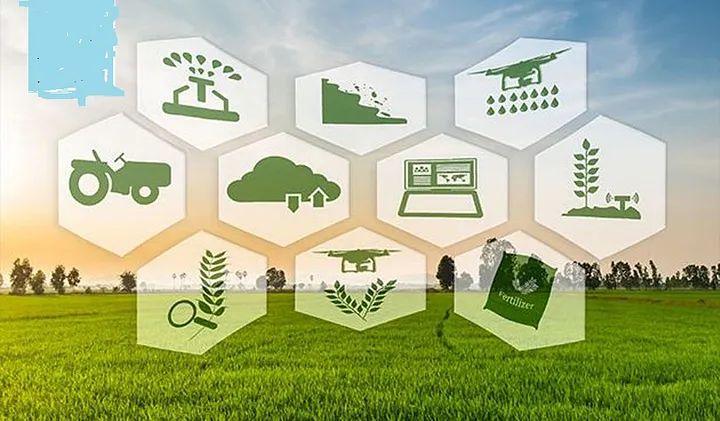
Agriculture is a major carbon contributor. Sustainable Tech Innovation is turning farms into carbon sinks.
Vertical Farming and Hydroponics
By growing food in controlled indoor environments, we use 95% less water and zero pesticides. These farms are often located in the heart of cities, eliminating the carbon cost of food transportation.
Precision Agriculture
Drones equipped with multispectral cameras can identify exactly which plant needs water or nutrients, reducing chemical runoff into local water systems by up to 60%.
9. Challenges to Sustainable Innovation
Despite the progress, several hurdles remain:
-
Initial Cost: Green tech often requires higher upfront investment.
-
Infrastructure Lag: Our current grids were not designed for two-way power flow from millions of homes.
-
Regulatory Speed: Laws are still catching up to the pace of bio-tech and nuclear innovation.

10. Conclusion: The Only Path Forward
The “Great Decoupling”—the separation of economic growth from environmental destruction—is finally happening, powered by Sustainable Tech Innovation. In 2026, we have realized that a healthy planet is the only viable foundation for a digital future.