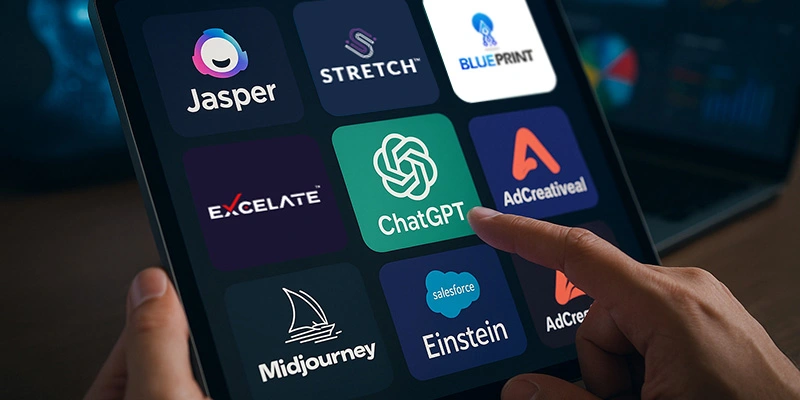
The definition of a “productive workday” has been completely rewritten. In the pre-AI era, productivity was often measured by the volume of manual tasks completed—emails sent, data entered, or meetings transcribed. In 2026, those tasks have been relegated to background processes. Today, high-level productivity is defined by strategic decision-making and creative output, made possible by the integration of Top Productivity AI Software.
We are no longer just using “tools”; we are collaborating with “agents.” These sophisticated software ecosystems have moved beyond simple automation into the realm of proactive assistance. This guide explores the elite tier of Top Productivity AI Software that is redefining the modern workplace across writing, project management, coding, and administrative workflows.
1. The Shift from “Tools” to “AI Work Operating Systems”
In 2026, the most significant trend in productivity is the death of the standalone app. The leaders in Top Productivity AI Software have evolved into “Work Operating Systems” (Work OS) where AI is woven into every pixel of the interface.
The Rise of Agentic Productivity
The software of 2026 doesn’t wait for a command; it anticipates a need. If you have a meeting scheduled for 2:00 PM, your Productivity AI has already summarized the previous three related email threads, drafted an agenda, and checked the LinkedIn profiles of the new attendees—all before you’ve even opened your laptop.
2. Top Productivity AI Software for Communication and Writing
Communication remains the largest “time sink” in professional life. The latest generation of AI writing assistants has moved far beyond basic grammar checking.
Jasper and Copy.ai: The Content Engines
For marketing and content strategy, Jasper remains a powerhouse. In 2026, it utilizes “Brand Memory,” allowing it to scan your company’s entire historical output to ensure every email, blog post, and social caption matches your specific brand voice perfectly.
Grammarly Business: The Executive Editor
Grammarly has evolved into a real-time communication coach. It doesn’t just fix typos; it analyzes the “Social Intelligence” of your messages, suggesting tone shifts to ensure your feedback is constructive or your sales pitch is appropriately persuasive.
-
ALT text: Comparative interface of an AI writing assistant optimizing a professional email.
-
Description: A digital workspace showing how AI provides tone suggestions and structural improvements to a business communication draft.
3. Project Management Reimagined: AI-Driven Coordination
Managing a team’s “cognitive load” is the new frontier of project management. The Top Productivity AI Software in this category focuses on eliminating “work about work.”
Notion AI: The All-in-One Knowledge Hub
Notion has become the central nervous system for thousands of startups. Its AI doesn’t just write text; it “reasons” across your entire workspace. You can ask Notion AI, “What is the status of the Q3 launch based on everyone’s notes?”, and it will synthesize a progress report from dozens of scattered pages.
Monday.com and Asana: Predictive Project Health
These platforms now utilize Predictive Analytics Models to forecast project delays. By analyzing the historical velocity of a team, the AI can flag a project as “at risk” two weeks before a deadline is actually missed, allowing managers to reallocate resources proactively.
4. Top Productivity AI Software for Meeting Intelligence
Meetings used to be where information went to die. In 2026, meetings are “searchable assets.”
Otter.ai and Fireflies.ai: Beyond Transcription
These tools no longer just provide a transcript; they provide “Meeting Intelligence.” They automatically identify:
-
Action Items: Who promised to do what?
-
Sentiment Analysis: How did the client react to the pricing proposal?
-
Knowledge Retrieval: Pulling in data from your CRM during the call to answer questions in real-time.
-
ALT text: Real-time meeting intelligence software capturing action items during a conference call.
-
Description: A professional UI where an AI agent transcribes a call while simultaneously categorizing key decisions and follow-up tasks.
5. Software Development: The Era of the 10x Engineer
For technical teams, Top Productivity AI Software has halved the “Time-to-Code.”
GitHub Copilot and Cursor
GitHub Copilot has moved from “Autocomplete” to “System Architect.” Developers can now describe a feature in plain English, and the AI will generate the frontend components, backend logic, and the necessary database migrations simultaneously. This allows engineers to focus on Neural Network Optimization and high-level logic rather than syntax.
See also
6. Personal Productivity: The AI Chief of Staff
On an individual level, Top Productivity AI Software is acting as a “Cognitive External Brain.”
Reclaim.ai and Motion: The Autonomous Calendar
Stop manually moving blocks of time. Motion uses AI to build your schedule every morning. If a new high-priority task arrives, the AI automatically reshuffles your entire week to find the optimal time for deep work, ensuring that your “Focus Time” is protected from meeting creep.
Readwise and Mem: Knowledge Management
Readwise uses AI to surface highlights from your reading at the exact moment they are relevant to a project you are working on. It bridges the gap between “consuming information” and “applying knowledge.”
-
ALT text: AI-driven calendar software optimizing a daily schedule for maximum deep work.
-
Description: A visual representation of a dynamic calendar where “Focus Time” and “Meetings” are automatically rebalanced by an AI algorithm.
7. The ROI of Productivity AI: Why Implementation Matters
Why should an enterprise invest in Top Productivity AI Software? The data from 2025-2026 is clear:
-
Reduction in Email Volume: Companies using AI-driven knowledge bases report a 40% drop in internal “status update” emails.
-
Faster Onboarding: New employees can use AI “search-your-company” tools to learn internal processes 50% faster than traditional mentorship.
-
Creative Unleashing: By automating the “drudge work,” employees report 30% higher job satisfaction and more time spent on innovation.
8. Overcoming the “AI Tool Fatigue”
With so many options, how do you choose the right stack? A successful Step-by-Step AI Implementation involves:
-
The Integration First Rule: Only choose software that talks to your existing tools. Siloed AI is wasted AI.
-
The “Human-in-the-Loop” Requirement: The best Top Productivity AI Software always allows for human verification.
-
Data Governance: Ensure that the software complies with your Data Governance Frameworks so your private company data isn’t used to train public models.
9. Hardware Performance: Is Your PC Ready for AI?
In 2026, your productivity software is only as fast as your hardware. Many of the Top Productivity AI Software suites now offer “Local Mode” for privacy and speed. This requires a Copilot+ PC with a high-performance NPU, allowing the software to run Real-time Data Processing locally without relying on slow cloud pings.
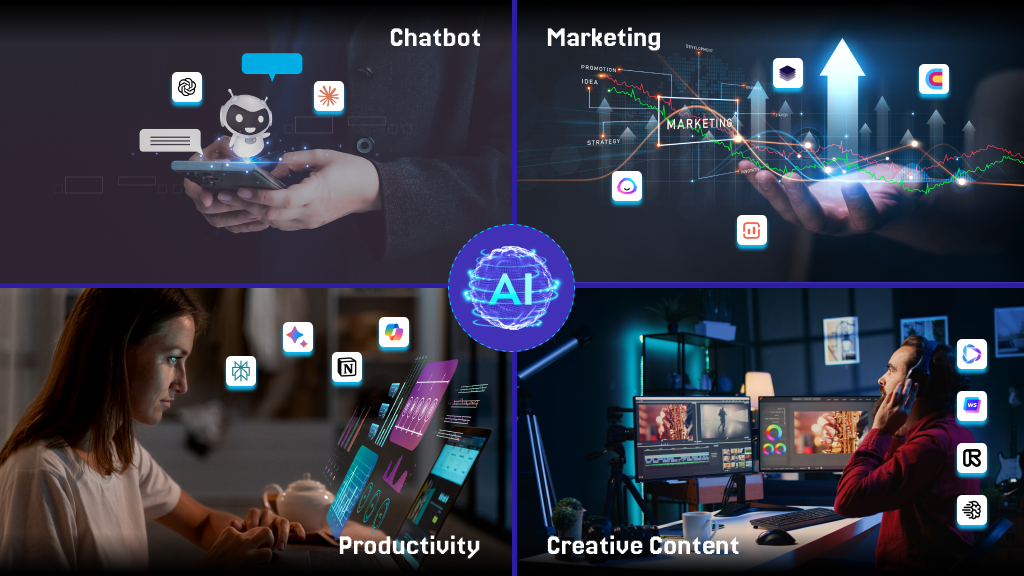
10. Conclusion: Winning the Time War
We are in the midst of the greatest productivity boom in human history. The gap between “high performers” and “average performers” is no longer about who works more hours—it’s about who has the best Top Productivity AI Software stack.
By automating the mundane, predicting the complex, and organizing the chaotic, AI allows us to return to what humans do best: thinking, creating, and leading. If you haven’t audited your productivity stack in the last six months, you are likely working harder than you need to.